Here’s the short answer for psychology today vs own website: Psychology Today is a supplement, and your own website is the foundation. A directory profile rents you a spot in a crowded list; your website builds visibility you own, attracts clients who choose you rather than whoever was next in the grid and it compounds in value every year instead of billing you every month.
But short answers hide real trade-offs, and this decision deserves better than a slogan. So let’s look at the whole picture, honestly.
First, some reassurance
If you’re paying for a Psychology Today profile right now, you haven’t done anything wrong. For years it’s been the default advice handed to every new practice owner: get licensed, get insurance, get on Psychology Today. It’s the largest therapist directory out there, it ranks well on Google, and for many therapists it genuinely produces inquiries.
The question isn’t whether Psychology Today “works.” It’s a quieter, more important question: what kind of practice are you building and who controls how clients find it?
That’s what this comparison is really about.
What each one actually is
It helps to name the difference plainly, because they’re often treated as competing versions of the same thing. They’re not.
A Psychology Today profile is a listing. You fill in a template photo, blurb, specialties, fees and it appears in a searchable grid alongside every other therapist in your area who did the same. You’re borrowing the directory’s visibility, on the directory’s terms, for as long as you keep paying.
Your website is a place. It’s the only spot on the internet where a potential client can sit with your words, your tone, your way of understanding what they’re going through with no competitors in the sidebar and no template flattening you into a thumbnail. It’s slower to build. And it’s yours.
That one distinction –renting a listing vs owning a place– explains almost every row of the table below.
The honest comparison
| Psychology Today vs Own Website | Psychology Today profile | Your own website |
|---|---|---|
| Speed | Live in days. The genuine advantage. | Weeks to build; months for search visibility to mature |
| Cost over time | A monthly fee, forever. Stop paying, visibility vanishes overnight | Larger upfront investment; modest running costs. Value compounds instead of renewing |
| How clients experience you | One thumbnail in a grid of near-identical profiles | A full experience of your voice, story and approach, no one else on the page |
| The inquiries | More of them, but comparison-shoppers messaging several therapists at once; ghosting is common | Fewer at first, but they’ve already chosen you, they show up, convert and stay |
| Competition | Built into the page, your competitors are literally beside your face | None on the page. The competing happens on Google, where good SEO wins it once and keeps it |
| Control | The directory sets the format, the ranking rules and the price, all can change without asking you | You set everything. Nothing changes unless you change it |
| Long-term asset value | Zero. Ten years of payments builds nothing you keep | Every page, post and ranking is equity in a marketing asset you own |
| Fit for how people choose a therapist | Optimized for browsing and filtering | Optimized for the real decision: does this person get me? |
The part nobody tells new practice owners
Let’s stay with that “inquiries” row for a moment, because it’s where the lived experience sits.
Directory inquiries and website inquiries feel different, and most therapists discover this the hard way. The directory message often opens with a fee question, or arrives from someone who has six browser tabs open, six therapists, six near-identical profiles, and a decision that will come down to price or the soonest opening. You answer warmly. You hear nothing. It’s not personal; it’s what a comparison grid trains people to do.
The website inquiry reads differently. “I read your page about anxiety in high-achievers and it felt like you were describing my life.” This person isn’t shopping anymore. They found your place, spent time in it, and reached out to you specifically. These are the consultations that show up, the clients who stay, the caseload that stops feeling fragile.
Neither channel has a monopoly on good clients. But if you’ve ever wondered why directory leads ghost so often, it’s not you it’s the format. We wrote a whole guide on breaking that dependence: How to Get Therapy Clients Without Psychology Today.
The math worth doing once
We won’t invent numbers for you, fees and results vary too much by location. But there’s a simple exercise worth ten minutes of your evening:
Add up what your directory profile has cost you since you created it. Every month, every year. Now ask what that total built. If you stopped paying tomorrow, what remains?
Then compare it with a website: a real upfront investment, yes but one where the same money produces pages that keep ranking, copy that keeps converting, and visibility that doesn’t have a landlord. One is an expense that repeats. The other is an asset that accumulates.
For most practices intending to exist five years from now, that reframe settles the question.
So… should you cancel Psychology Today?
Here’s where we’ll be more honest than the average “ditch the directory” post: probably not yet.
The smart sequence isn’t rip-and-replace. It’s this:
- Keep the profile for now — while it’s producing anything, it’s a supplement worth having.
- Build the foundation — a website whose pages speak your clients’ language, with the local SEO basics in place. Start with your Google Business Profile (free, one hour) and, if you want the fuller picture, our beginner’s guide to SEO for therapists.
- Watch where inquiries come from. Ask every new contact how they found you. This one habit turns the whole question from opinion into data.
- When your website consistently outperforms the directory, downgrade or cancel — not as a leap of faith, but as an obvious next step your own numbers already made.
The goal was never to be anti-directory. It’s to reach the point where the directory is optional, where canceling it would be a line item, not a crisis. That’s what owning your visibility feels like.
Not sure which side of this your current website falls on?
Plenty of therapists technically have a website but it’s a quiet brochure that Google barely shows and visitors don’t act on, which means the directory still does all the real work. If you suspect that’s you, our free website audit will tell you plainly: what your site does well, what’s costing you inquiries, and whether it needs a refresh or a rebuild. No call required, no pressure attached.
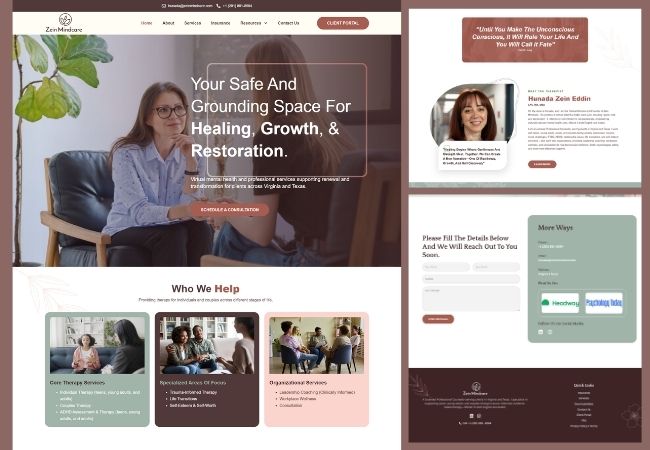
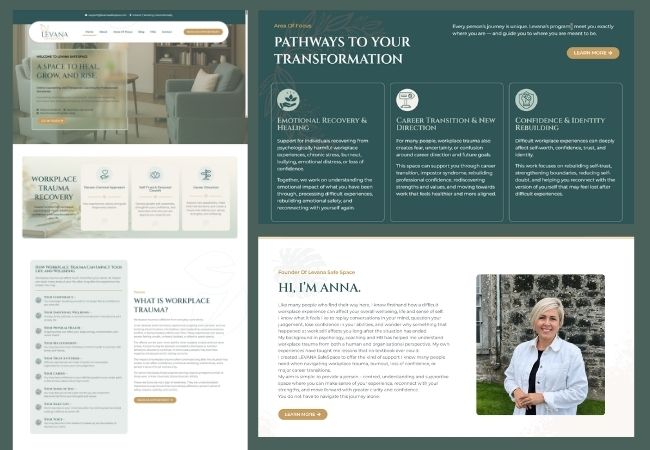
And if you’re ready to build the foundation properly – design, copywriting and SEO handled for you by a team that builds practice websites every week, that’s exactly what our therapist website design package is for. You can see real practice websites we’ve built], or just – book a free consultation and we’ll map out what your situation actually calls for.
Frequently asked questions
Is Psychology Today worth it for therapists?
It can be, as a supplement, especially early in practice when your website’s search visibility is still growing. It becomes a problem only when it’s your practice’s primary or sole source of clients, because that visibility is rented, shared with competitors on the same page, and disappears the day you stop paying.
What’s the best alternative to Psychology Today?
Your own website, supported by local SEO and a complete Google Business Profile. Together they capture the same searchers directories capture, people Googling for therapy in your area but send them to a page where you’re the only therapist in the room.
Do clients from a website really convert better than directory leads?
In our experience building practice websites, yes because of self-selection. A website inquiry has already read your approach and chosen you specifically, while directory formats invite messaging several therapists at once. Fewer inquiries, higher intent, less ghosting.
How long before my website can replace my directory profile?
Give it 6–12 months of honest effort (or done-for-you help) for search visibility to mature, and track how every inquiry found you along the way. Cancel the directory when your own data says it’s no longer pulling its weight not before, and not on faith.
Can I just rely on my Psychology Today profile instead of having a website?
You can, but it’s fragile: you’ll compete inside a grid on the directory’s terms, and your entire client pipeline depends on a subscription you don’t control. A website beside the profile even a simple one gives referrals and directory browsers a place to fall in love with your practice specifically.