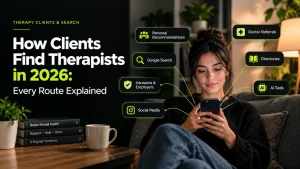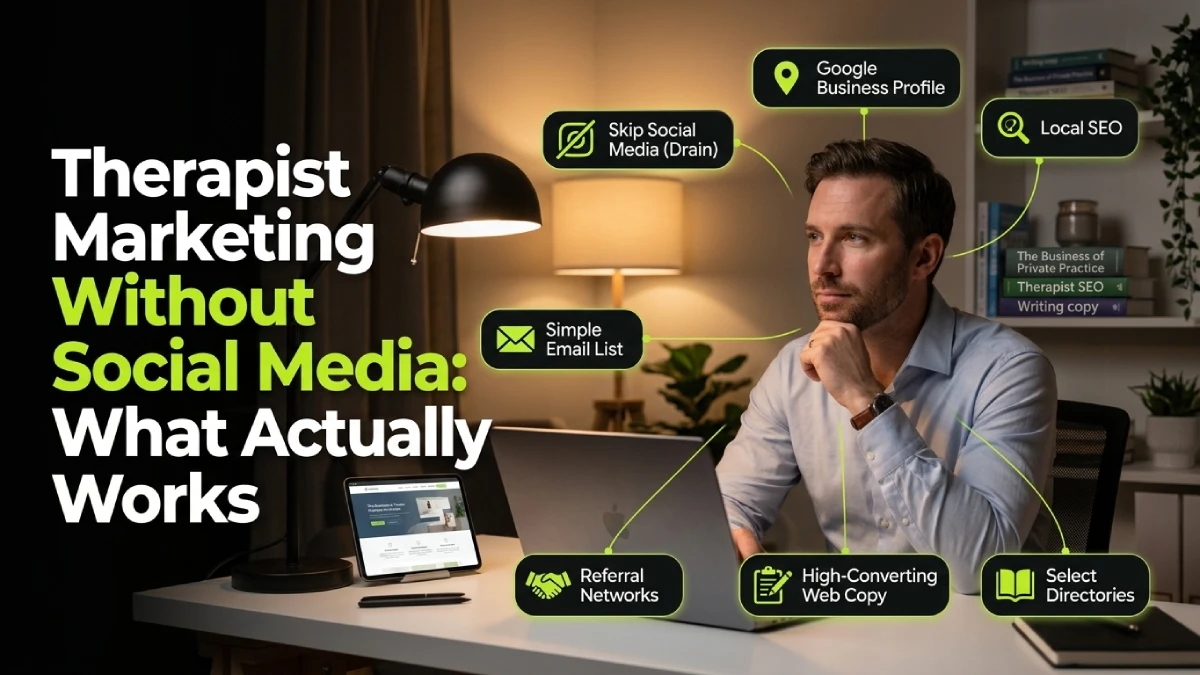
Therapist marketing without social media works, and plenty of full practices rely on it. You can build a full caseload without posting anything. Most clients find a therapist through a Google search, a referral from someone they trust, a directory, or their insurance or employer. Social media is one route among many, and for most practices it’s a small one. If posting drains you, you can put that time into a website that ranks, a Google Business Profile, referral relationships and a simple email list. Those keep working when you stop.
The post that took two hours
You probably know the feeling. You sit down to make one Instagram post. You pick a photo, write a caption, rewrite it because it sounds too clinical, then rewrite it again because now it sounds too casual. You check the hashtags. You post it. Forty people see it. Two like it. One of them is your sister.
Two hours gone, on a Sunday, on something that will be buried by Tuesday.
Plenty of therapists have quietly decided they’re done with this, and they still have full caseloads. If you’ve been feeling guilty about not posting, this post is permission to stop. And a plan for what to do with that time instead.
Why social media is a poor fit for many therapists
Time is only part of it. Some of the reasons are specific to your work.
Boundaries. Clients may follow you. Former clients may comment. Someone in your waiting room may have seen your holiday photos. Every post is a small decision about how much of yourself to show, and those decisions add up.
It rewards a kind of content that clashes with therapy. Short, punchy, confident, simplified. Real therapy is slow, careful and personal. Turning it into a 15-second clip can feel like a betrayal of the work.
Reach is borrowed. You don’t own your followers. The platform decides who sees each post, and it can change those rules any time. Accounts get hacked, suspended, or simply stop being shown.
Posts expire fast. A good post gets most of its attention in a day or two. A good page on your website can bring visitors for years.
Social media can still be useful. It’s optional, and for many therapists the cost is higher than the return.
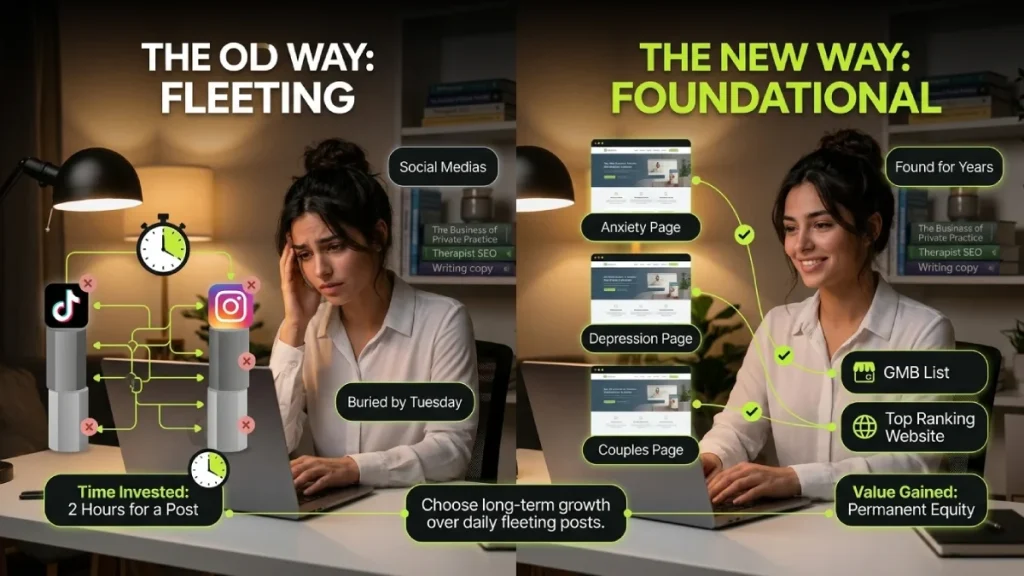
Therapist marketing without social media: what works instead
These are the channels most full practices actually rely on. All of them keep working after you’ve done the work.
1. A website people can find
When someone searches anxiety therapist near me or couples counselling in Bristol, they’re looking for help right now. Showing up for that search beats any number of posts, because the person is already looking for exactly what you offer.
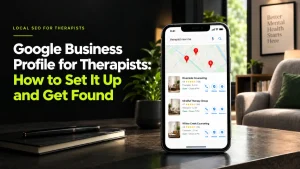
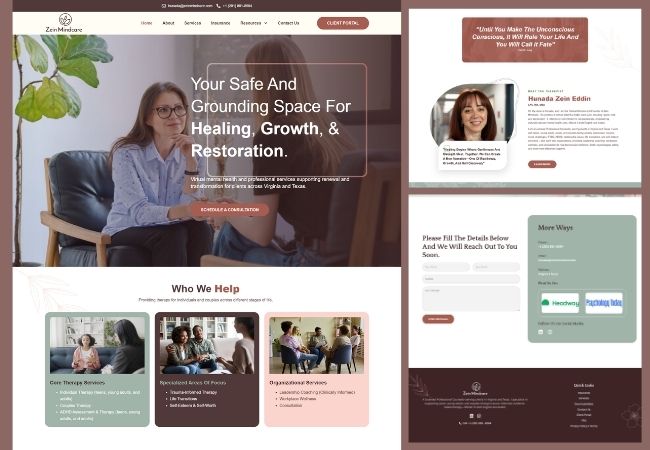
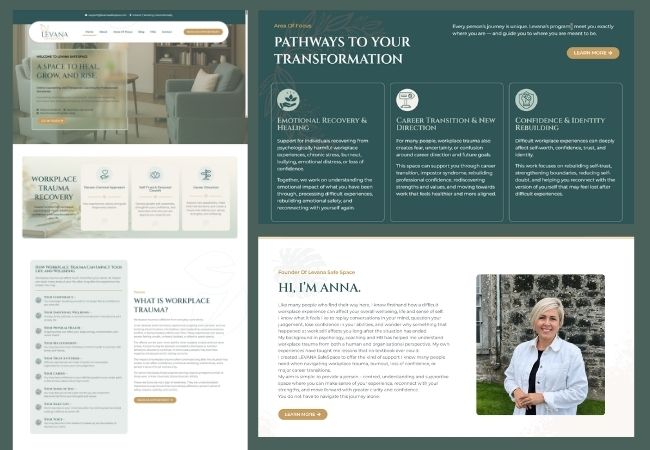
That takes two things. A website with a clear page for each thing you help with, and a complete Google Business Profile so you appear on the map.
- SEO for therapists: a plain-English guide
- Google Business Profile for therapists
- Local SEO for private practice
2. Words on that website that make people feel understood
Getting found is half of it. The other half is what they read when they arrive. A homepage that speaks to their experience, fees they can see, and a booking button that’s easy to tap. This is where most of the clients social media would have brought you get won or lost anyway, because almost everyone who sees your post checks your website before contacting you.
3. Referral relationships
A GP who trusts you. A psychiatrist who knows your specialty. A colleague who’s full and needs somewhere to send people. These relationships can bring more clients than a year of posting, and the clients often stay longer because they arrive already trusting you.
Make a short list of ten people who regularly see your ideal clients. Reach out personally, one at a time. Tell them clearly who you help best. Keep in touch a couple of times a year. That’s the whole system.
4. Two or three good directories
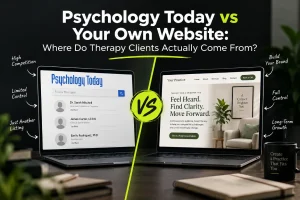
Directories do the visibility work for you while your website builds up. Psychology Today, your professional body’s register, and one directory that fits your niche are usually enough.
5. A simple email list
An email list is the one audience nobody can take away from you. A short monthly note to people who signed up on your website keeps you in mind while they decide. Deciding to start therapy can take months.
Keep it simple. A thought you’ve been sitting with, a resource you recommend, a reminder that you have space. No newsletter design skills needed.
6. A few articles that answer real questions
You don’t need a content calendar. One helpful article a month answering a question clients ask you is plenty. How do I know if I need therapy? Why do I feel worse on Sundays? Unlike a post, an article on your site can show up in Google searches for years.
7. Your local community
Offline still works, especially for in-person practices.
- Offer a free talk at a library, community centre or local business
- Run a short workshop for a school’s parent group or a workplace wellbeing day
- Write a piece for a local newsletter or news site
- Go on a local podcast or radio show
- Leave a short card with GP surgeries or health centres you have a relationship with
Each of these also tends to produce a link to your website from a local site, which helps your Google rankings too.
When social media is worth it
There are good reasons to stay on a platform. If any of these fit, keep going, and do it on your terms.
- You genuinely enjoy it. Enjoyment shows, and it’s sustainable.
- Your niche gathers there. Some communities do find support through specific platforms. Perinatal, ADHD and neurodivergent communities are examples.
- You do corporate, training or speaking work. LinkedIn is useful for this, and it rarely blurs client boundaries the way Instagram can.
- You’re building something beyond one-to-one therapy, like a book, a course or a podcast.
Even then, treat social media as a way to send people to your website and email list, where you control what happens next.
A weekly plan for therapist marketing without social media
If you were spending three hours a week on social media, here’s one way to use them.
Week 1: Rewrite the top of your homepage.
Week 2: Set up or update your Google Business Profile.
Week 3: Contact three people on your referral list.
Week 4: Write one helpful article or one new service page.
Repeat the cycle. Within a few months you’ll have pages that rank, a profile that shows up on the map, and a handful of people who refer to you. All of it keeps working whether you log in or not.
If you’re worried about deleting your accounts
You don’t have to delete anything. You can leave your profiles up with a clear bio and a link to your website, and simply stop posting. Some therapists pin one post explaining they’re not active there and pointing to their site. That’s enough for anyone who looks you up.
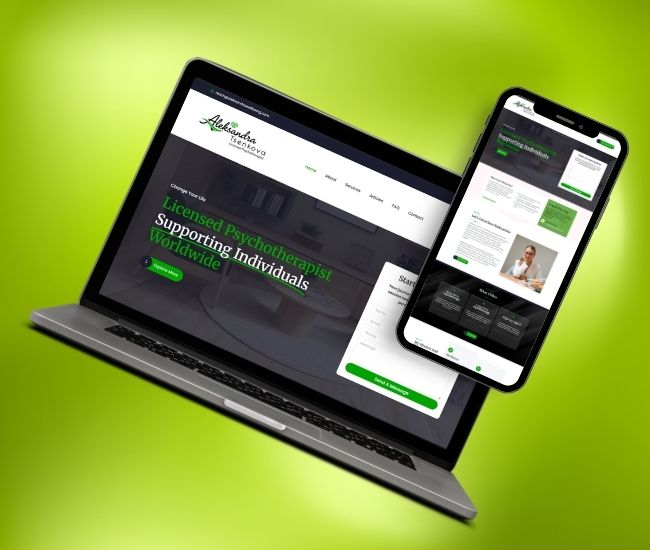
If you’re deciding where your effort should go, our private practice marketing guide puts all of this in order. Or if you’d like help setting up the website and search side, see our therapist website design work or book a free 30-minute call. I’ll tell you honestly what I’d do first, and if your current setup is fine, I’ll say that too.
Frequently asked questions
Can therapists get clients without social media?
Yes. Most therapy clients find a therapist through Google search, referrals, directories, insurance or their employer. A website that ranks for what you help with, a complete Google Business Profile and steady referral relationships can fill a practice with no social media at all.
Do therapists need Instagram?
No. Instagram suits some therapists who enjoy it or whose niche gathers there, but it’s optional. Posts fade within days, while a website page can bring visitors for years. If Instagram drains you, putting that time into your website and referrals is usually a better trade.
What’s the best alternative to social media for a therapy practice?
Your own website, supported by local search. People searching Google for a therapist are looking for help right now, which makes them more likely to book than someone scrolling a feed. Add a Google Business Profile and referral relationships, and you have a steady base.
Should I delete my practice’s social media accounts?
You don’t need to. Leave a clear bio and a link to your website, then stop posting if it isn’t working for you. Some therapists pin one post explaining they’re not active there and pointing people to their website. That covers anyone who looks you up.
Is LinkedIn worth it for therapists?
It can be, especially if you do corporate work, training, supervision or speaking, or want referrals from other professionals. It’s less useful for reaching individual therapy clients directly. Treat it as a professional networking tool and link back to your website.