How clients find therapists comes down to a handful of routes: a recommendation from someone they trust, a referral from a doctor, a Google search, a directory, their insurance company or employer, and increasingly an AI tool like ChatGPT. What almost all of these routes have in common is the last step. Before someone contacts you, they look you up. They search your name, find your website or profile, and decide from that whether to get in touch. So wherever a client starts, your website is usually where they decide.
Following one person from first thought to first session
Let’s follow someone. Call her Sam. She’s made up, but her path will look familiar.
Sam has been anxious for most of a year. It started with work and spread to everything. She’s mentioned it to a friend, who said you should talk to someone. She agreed and then didn’t do anything for three months.
One night she can’t sleep. She picks up her phone and types anxiety therapist near me. She sees a map with three practices and a list of websites below it. She opens two of them. One has a long list of services and a stock photo of a sunset. The other starts with a sentence that describes exactly how she’s been feeling. She reads that one for a while. She doesn’t book. It’s late.
A week later her friend mentions a therapist’s name. Sam searches it. It’s the same website she read that night. That settles it. She books a free call the next morning.
If you asked Sam how she found her therapist, she might say a friend recommended her. She might say Google. Both are true. That’s how most real paths look. Several touches, usually ending on your website.
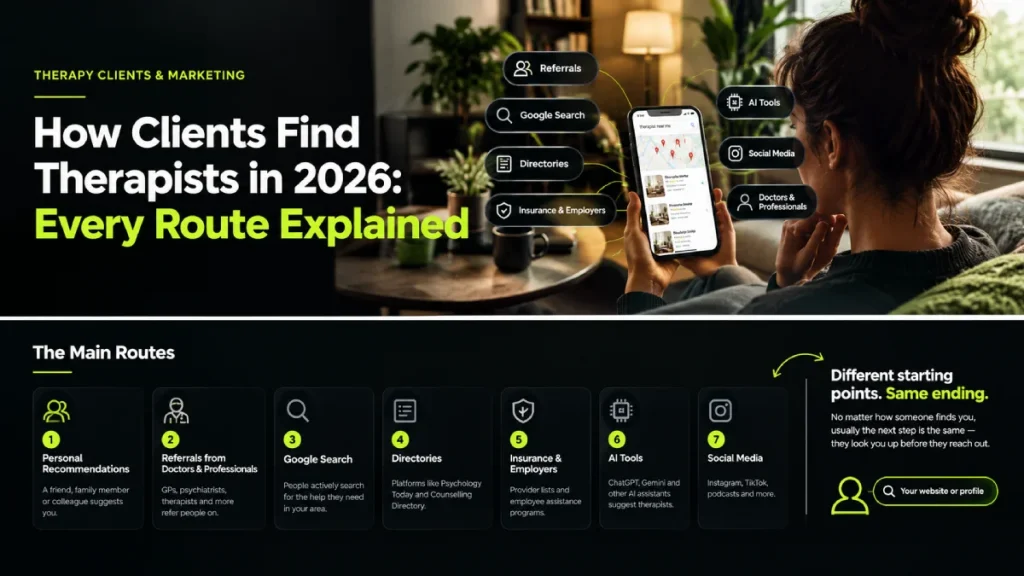
How clients find therapists: the main routes
1. Personal recommendations
A friend, family member or colleague says I saw someone who really helped. This is still one of the most trusted routes, and it’s the one you control least directly.
What happens next is predictable. The person searches your name. If they find a clear, warm website that matches what their friend said, the recommendation turns into an enquiry. If they find nothing, or an out-of-date page, some of them drift away.
2. Referrals from doctors and other professionals
GPs, family doctors, psychiatrists, school counsellors, midwives and other therapists all refer people on.
In the US, primary care doctors and psychiatrists often keep a short list of therapists they trust. Being on that list is worth more than almost any marketing.
In the UK, a GP will often point people to NHS Talking Therapies first, which people can also refer themselves to. When waiting lists are long, or someone wants a specific kind of help, they look for private therapists, often with a name or two from their GP.
Either way, the referred person usually searches your name before calling.
3. Google search
Someone types what they need into Google. Therapist near me. Grief counselling Manchester. EMDR therapist Austin. Couples therapy online. They see the map results first, then websites, then directory listings.
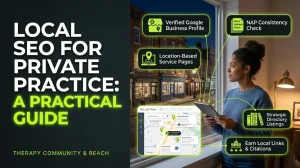
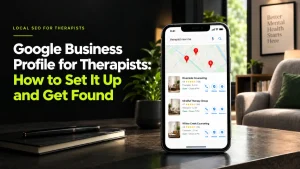
This route brings people who are actively looking right now, often late at night when the decision finally gets made. It’s also the route you can do the most about yourself, through your Google Business Profile and the pages on your website.
4. Directories
Psychology Today, GoodTherapy and TherapyDen in the US. Counselling Directory, the BACP directory and Psychology Today in the UK. People use them to browse and filter by issue, location, price and approach.
Directories bring volume, and the people using them are often comparing several therapists at once. Many click through to your website before deciding.
5. Insurance and employers
In the US, many people start with their insurance company’s provider list, or with platforms that connect them to in-network therapists. If you take insurance, being listed correctly with each insurer matters.
In the UK, some people come through private health insurance or their employer’s employee assistance programme.
These routes often hand someone a list of names. What they do next is the same as everywhere else. They look each name up.
6. AI tools
This is the newest route, and it’s growing. People now ask ChatGPT, Gemini, Copilot or Google’s AI answers things like find me a therapist in Leeds who works with burnout and has evening appointments. The tool gives them a short list and a summary of each.
Those tools build their answers from what’s written about you across the web: your website, your directories, your Google profile. Clear, specific, consistent information makes you easier to describe accurately.
7. Social media
Some people find therapists through Instagram, TikTok or podcasts, especially younger clients and particular communities. For most practices it’s a smaller route than the ones above, and it’s entirely optional.
The one step almost every route shares
Look back at the list. A friend’s recommendation, a doctor’s referral, a directory profile, an insurer’s list, an AI suggestion. Almost every one ends with the person looking you up before they reach out.
That makes your website the most important checkpoint in your whole practice. It’s where a recommendation gets confirmed or quietly dropped. Where a directory browser decides whether you’re the one. Where an AI’s short summary either matches what they find or doesn’t.
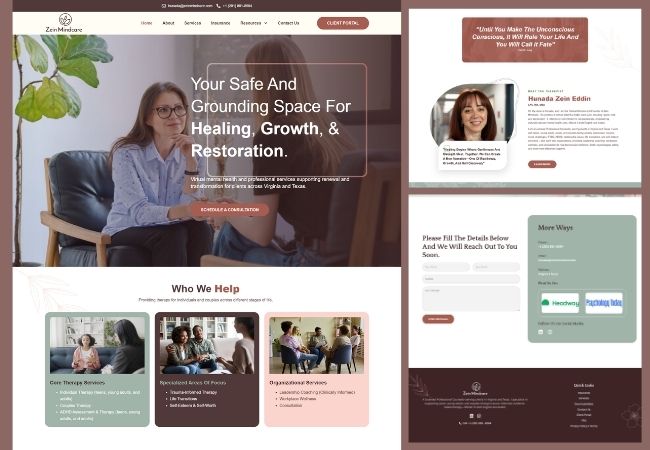
So if you’re deciding where to start, start there. A clear homepage that speaks to the people you help best, a page for each specialty, visible fees and an easy way to book.
What’s changed in how clients find therapists
A few shifts worth knowing about.
AI answers are now part of search. Google often shows an AI summary above the normal results, and many people ask chat tools directly. Clear, factual information about your practice matters more than it used to.
Online sessions widened who can find you. A therapist who works online can be found by people across the whole area where they’re licensed or registered to practise. That’s a bigger pool, and more competition too.
People expect to book online. More clients expect to pick a time themselves without phoning. An embedded booking link on your site removes a step that loses people.
Fees matter earlier. People want to know cost before they reach out. Practices that show fees clearly tend to get fewer mismatched enquiries.
How to find out how your clients find you
Every practice is different. The general picture above is a starting point, and your own numbers matter more.
Ask every new enquiry one question: How did you hear about me? Write the answer down. If they say Google, ask what they searched for. If they say a friend, ask if they looked at your website before getting in touch.
After three to six months you’ll know your top two or three routes. Put most of your effort there, and stop spending time on the ones that don’t bring anyone.
Our guide to therapy clients from a website has a simple monthly tracking sheet you can use.
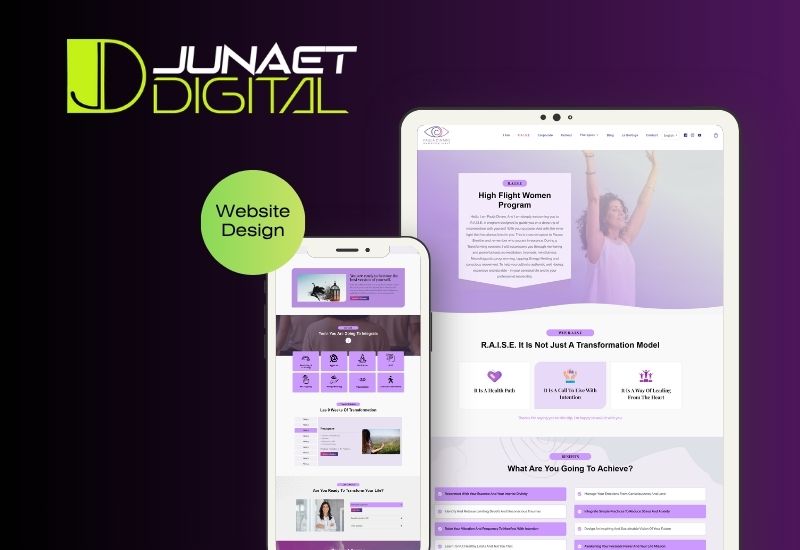
If you’d like the full picture of where to spend your time, start with our private practice marketing guide. And if you want help making your website the place where people decide, see our therapist website design work or book a free 30-minute call.
Frequently asked questions
How do most clients find a therapist?
Most clients find a therapist through a mix of personal recommendations, doctor referrals, Google searches, directories and their insurance or employer. Most then look the therapist up online before contacting them, so a clear website and Google profile help with nearly every route.
Where do therapy clients come from?
It varies by practice, which is why it’s worth tracking. Common sources are Google search, Google Maps, referrals from doctors and other therapists, friends’ recommendations, directories like Psychology Today, insurance lists and employee assistance programmes. Ask every new enquiry how they found you and record it.
Do people use AI to find a therapist?
Increasingly, yes. People ask tools like ChatGPT, Gemini or Google’s AI answers to suggest therapists who match their location, issue and preferences. Those tools draw on your website, directories and Google profile, so clear and consistent information helps you get described accurately.
How do people find a counsellor in the UK?
Many start with their GP, who may suggest NHS Talking Therapies, which people can also self-refer to. Others search Google, use Counselling Directory or the BACP directory, ask friends, or go through private health insurance or an employee assistance programme. Most check the counsellor’s website before contacting them.
What’s the most important marketing step for a therapist?
For most therapists, a clear website that speaks to their ideal client. Nearly every route a client takes, whether a referral, directory or search, ends with them looking at your website before they reach out. Make that page easy to understand and easy to book from.