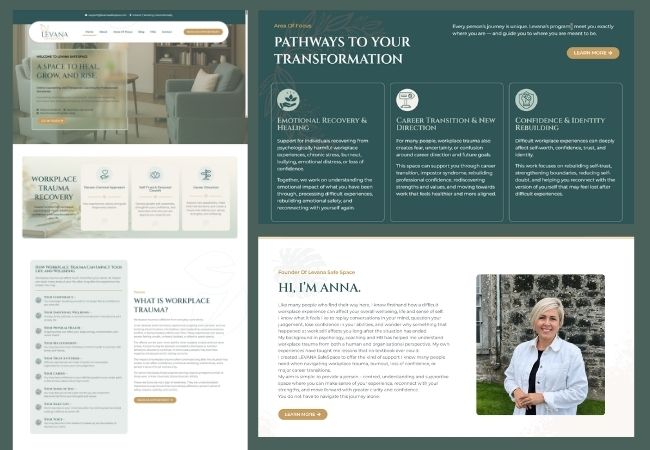
Yes, you can absolutely get therapy clients without Psychology Today. The most reliable way is your own website: one that shows up when people in your area search for help, and that feels so much like you that the right people book before they ever compare you to anyone else. In this guide, I’ll walk you through exactly how that works.
But first, let’s talk about why you’re here.
The directory treadmill is real
If you’re reading this, I’d guess something like this has happened to you.
An inquiry comes in through your Psychology Today profile. You feel that little lift of hope. You respond warmly, offer a consultation time… and hear nothing back. Or you do the free consult, and it turns out they were messaging six therapists at once and picked whoever had the soonest opening. Or the first question is about your fee, followed by silence.
Meanwhile, the monthly directory bill keeps arriving whether the inquiries turn into clients or not.
None of this means you’re doing anything wrong. It’s how directories are built. Your profile sits in a grid beside twenty other therapists in your area same photo size, same format, same little paragraph. The person searching is overwhelmed and comparison-shopping, because that’s exactly what the page invites them to do. You’ve been reduced to a thumbnail, and thumbnails compete on price and availability, not fit.
You didn’t spend years training to compete on price and availability.
Why your own website changes the dynamic
Here’s the difference, and it’s worth sitting with for a moment.
When someone finds you through a directory, they’re choosing from a list. When someone finds your website, they’re getting to know you.
On your own site, there’s no grid of alternatives beside your face. There’s your story, your way of describing the struggle they’re living with, your office (or your telehealth setup), your voice. A person who spends three minutes on a website that genuinely sounds like you has already begun to feel whether you’re their therapist, before any consultation happens.
That’s why clients who come through your own website tend to arrive differently. They’ve read your approach. They know your fee, if you list it. They’re not comparison-shopping anymore, they’re reaching out to you specifically. These are the inquiries that show up to the consult, convert, and stay.
The question is how they find that website in the first place. That’s what the rest of this guide covers, five channels, roughly in order of how much they can do for a private practice.
1. Google search — the channel that works while you sleep
Think about how you’d look for a therapist if you were struggling. You probably wouldn’t open a directory first. You’d do what everyone does at 11pm when the weight finally gets too heavy: open Google and type something like anxiety therapist near me or couples counseling [your city].
Every month, in your city, real people type those exact searches. The therapists whose own websites appear on that first page get a steady, quiet stream of inquiries, no ads, no content hamster wheel, no directory fees. This is what SEO (search engine optimization) means for a practice: showing up where people are already looking for you.
For a therapy website, that comes down to a few unglamorous but powerful things:
Pages that match how people search. A person searching EMDR therapy New York wants to land on a page about your EMDR work, not a generic “Services” page listing nine things. Each specialty you treat deserves its own page, written in the words your clients actually use. (Not “attachment repair” they’re searching “why do I push people away.”) We’ve broken down how to structure this in How to Write Therapy Service Pages That Rank.
Local signals. Your city in your page titles, a complete Google Business Profile, consistent name-address-phone details across the web. This is what puts you in the map results often the first thing a searcher sees. Our [LINK: /blog/google-business-profile-for-therapists — Google Business Profile setup guide for therapists] walks through it step by step.
A technically healthy site. Fast, mobile-friendly, structured so Google can understand it. Not exciting. Quietly decisive.
The honest part: SEO is not instant. It typically takes months, not days, to build momentum. But unlike a directory listing, every month of effort compounds. A page that ranks keeps ranking, it becomes an asset you own, working around the clock, including at 11pm when someone in your city finally decides they’re ready. If you want to understand the full picture first, start with our [LINK: /blog/seo-for-therapists-guide, beginner’s guide to SEO for therapists].
2. A website that converts — because traffic isn’t the goal, clients are
Here’s something we see constantly when reviewing therapist websites: the practice is getting visitors, but the visitors aren’t booking. The site is technically “working.” It just isn’t connecting.
Usually it comes down to a handful of fixable things:
The homepage talks about therapy in general instead of the person reading. Compare “I provide evidence-based psychotherapy for adults” with “You look fine from the outside. Inside, your mind won’t stop running.” One describes you. The other makes someone feel seen and feeling seen is the entire reason they’ll choose you over the therapist one search result down.
There’s no clear next step. A warm, obvious invitation –Book a free 15-minute call– should be visible on every page without scrolling. Not “Contact” buried in the menu. People reaching out for therapy are often at the edge of their courage; don’t make them hunt.
The about page reads like a CV. Your credentials matter, but they’re not why someone picks you. Your about page should answer the question every visitor is silently asking: will this person get me? We’ve written a full guide on this: How to Write a Therapist Bio That Gets Clients.
Booking has friction. Every extra step between “I’m ready” and “it’s scheduled” loses people. An embedded scheduler beats an email form; an email form beats a phone number alone.
If you suspect your site has these problems but can’t see them from the inside (nobody can — it’s your own website), this is exactly what our free website audit is for. We’ll look at your site the way a potential client does and send you a plain-English report of what’s helping and what’s quietly costing you inquiries.
3. Referral relationships — the channel therapists forget to build systems around
You already know referrals work. What’s easy to miss is that your website is what makes referrals convert.
When a GP, psychiatrist, school counselor, or fellow therapist mentions your name, the very next thing that person does is Google you. If they land on a warm, professional site that matches the recommendation they just heard, the referral completes. If they find a dated site or worse, just a directory profile a little doubt creeps in, and some percentage of those referrals quietly evaporate.
A simple system: keep a list of the ten professionals most likely to encounter your ideal clients. Reach out personally (not a mass email). Tell them exactly who you help best “I work with teens with anxiety” gives a referrer something to act on; “I work with everyone” gives them nothing. Then make sure the website they’ll check afterward confirms everything you said.
4. Content that answers real questions — blogging without the hamster wheel
You don’t need to post constantly. You need a small number of genuinely helpful articles that answer the questions your ideal clients are already typing into Google.
Think about what someone asks before they’re ready to search for a therapist: Why do I get angry over small things? How do I know if my drinking is a problem? Is couples counseling worth it if only one of us wants to go? Each of those is a doorway. A thoughtful article that meets that question with warmth, written the way you’d actually talk in session, introduces you to someone months before they’re ready to book. When they are ready, you’re not a stranger.
One well-crafted, search-informed post a month will outperform three rushed ones a week. This is the opposite of the content treadmill: slow, compounding, calm.
5. Email — the quiet channel nobody can take from you
An algorithm can bury your posts. A directory can raise its prices. Your email list is yours.
It doesn’t need to be clever. A simple monthly note a reflection, a resource, what you’ve been thinking about keeps you gently present in the inbox of everyone who was once interested but not ready. Therapy decisions have long timelines; people often circle a therapist for months before reaching out. Email is how you stay findable during the circling.
A small, honest lead magnet (a grounding exercise, a “how to know if it’s time for therapy” guide) on your website turns visitors who aren’t ready today into people you can still help tomorrow.
Should you delete your Psychology Today profile?
Honestly? Probably not, at least not yet.
This isn’t an all-or-nothing decision, and I’d be wary of anyone who frames it that way. A directory profile can still be a useful supplement, especially while your website’s search presence is growing. The problem was never having a profile. The problem is when the profile is your only front door, when your entire practice depends on rented visibility you don’t control.
The goal is to flip the ratio: your website becomes the primary way clients find you, and the directory becomes a bonus channel you could cancel tomorrow without feeling it. That’s not just a marketing improvement. Ask any practice owner who’s reached it, it’s a different relationship with your business. Calmer. Yours.
For a deeper comparison of how the two channels perform, we’ve written Psychology Today vs Your Own Website: Where Do Clients Actually Come From?
Where to start (without overwhelming yourself)
If this all feels like a lot alongside a caseload, that’s because it is. So start small, in this order:
- This week: claim and complete your Google Business Profile. One hour, free, and often the fastest visibility win available.
- This month: look honestly at your website’s homepage. Does it speak to your ideal client’s 11pm search, or does it describe you? If you’re not sure, request a free consultation and we’ll tell you.
- This quarter: give your top two specialties their own pages, written in your clients’ language.
- Ongoing: one genuinely helpful article a month. That’s the whole treadmill.
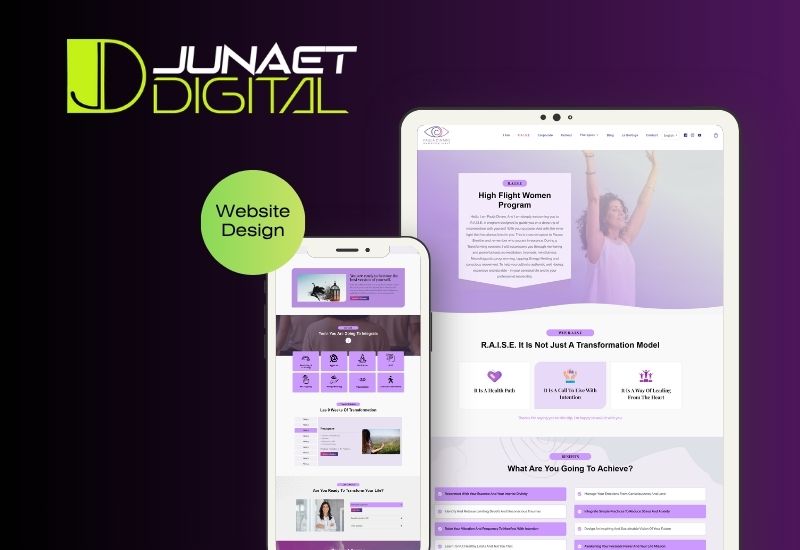
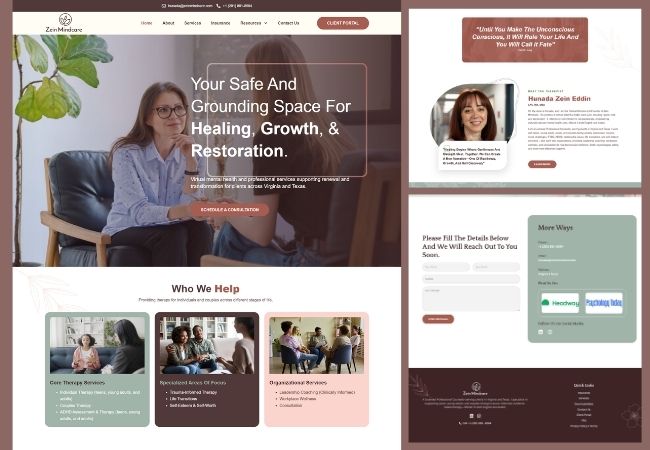
And if you’d rather hand the whole thing to someone who builds this for therapists every week — the design, the words, the SEO that’s exactly what we do. Take a look at our therapist website design package, browse the practice websites we’ve built, or book a free consultation and we’ll map out what your practice actually needs. No pressure, and we’ll tell you honestly if you don’t need us yet.
Frequently asked questions
Can I really fill a caseload without Psychology Today?
Yes. Many full practices run primarily on Google search, referrals, and their own website. It takes a few months to build, but unlike a directory, the visibility you create is yours, it compounds instead of renewing monthly.
How long does SEO take for a therapy practice?
Typically you’ll see early movement in 3–6 months and meaningful, consistent inquiries within 6–12, depending on your city’s competition. Local map visibility through Google Business Profile can come much faster.
Is a directory profile bad for my practice?
No, it’s a reasonable supplement. It only becomes a problem when it’s your practice’s single source of clients, because you’re renting visibility you don’t control and competing in a side-by-side grid.
What matters more: my website’s design or its words?
Both, but words carry more weight than most therapists expect. A beautiful site with generic copy loses to a modest site whose words make the right person feel understood. Ideally, you never have to choose.
What’s the single fastest thing I can do this week?
Complete your Google Business Profile — categories, photos, description, service areas. It’s free, takes about an hour, and influences the map results local searchers see first.